



Ingrown toenails
Relief starts here
Ingrown toenails occur when the edge of a toenail grows into the surrounding skin, causing pain, redness, swelling and sometimes infection.
They can result from improper nail trimming, tight footwear, injury or genetic factors.
If left untreated, ingrown toenails can become increasingly painful and lead to infection.
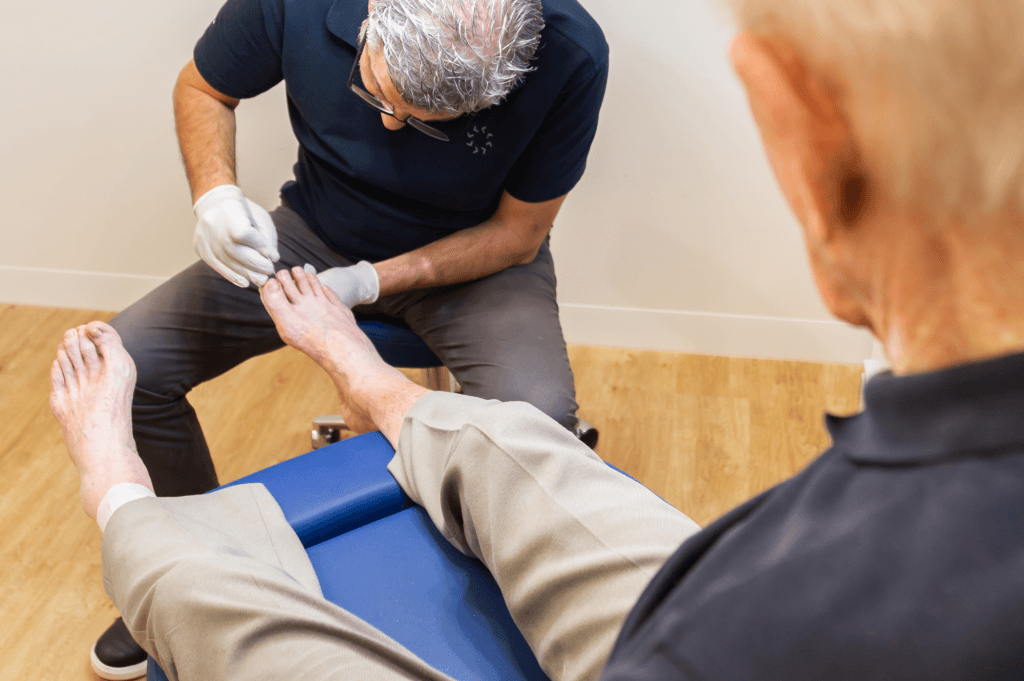
Ingrown toenails can often be managed with conservative treatment, including proper nail cutting techniques and professional advice and care from a podiatrist.
Our podiatrists will guide you on how to care for your toenails and provide regular conservative treatment to help prevent the recurrence of ingrown toenails.
If conservative treatment is not effective, a minor surgical procedure may be recommended.
This simple and highly successful procedure typically involves removing a small portion of the affected nail to provide long-term and permanent relief.
Performed at our Plympton clinic, the procedure is quick and straightforward.
Ingrown toenail treatments
- Podiatry treatment
- Assess & treat cause
Ingrown toenail FAQs
Ingrown toenails can develop due to improper nail trimming, tight footwear, injury, genetics or natural nail shape. When the nail edge grows into the surrounding skin, it can cause pain, swelling and infection.
Common symptoms include pain, redness, swelling, tenderness and sometimes infection (pus, warmth or spreading redness). If left untreated, the condition can worsen over time.
Mild cases can be managed by soaking the foot in warm, salty water, applying an antiseptic and wearing comfortable shoes. However, if pain persists or infection develops, professional podiatry treatment is recommended.
You should seek professional treatment if you experience severe pain, signs of infection or recurring ingrown toenails. A podiatrist can provide relief through conservative care or minor procedures.
Treatment options include nail cutting, dressing or minor in-clinic procedures (such as partial nail edge removal) to provide long-term relief. We also assess and treat underlying cause for reoccurring ingrown toenails.
No. Many cases can be treated conservatively by a podiatrist without surgery.
The procedure is performed under local anesthesia, making it virtually painless. Most patients experience minimal discomfort and quick recovery.
✔ Trim nails following the contours of the toe
✔ Avoid cutting nails too short
✔ Wear well-fitted shoes with a wide toe box
✔ Keep feet clean and dry to prevent infection
Yes, children and teenagers are prone to ingrown toenails due to rapid growth, sports activities and wearing tight shoes. If your child experiences persistent pain, our podiatrists can help.
Ignoring an ingrown toenail can lead to worsening pain, infection and in severe cases, complications that may require more invasive treatment. Early intervention is key.