



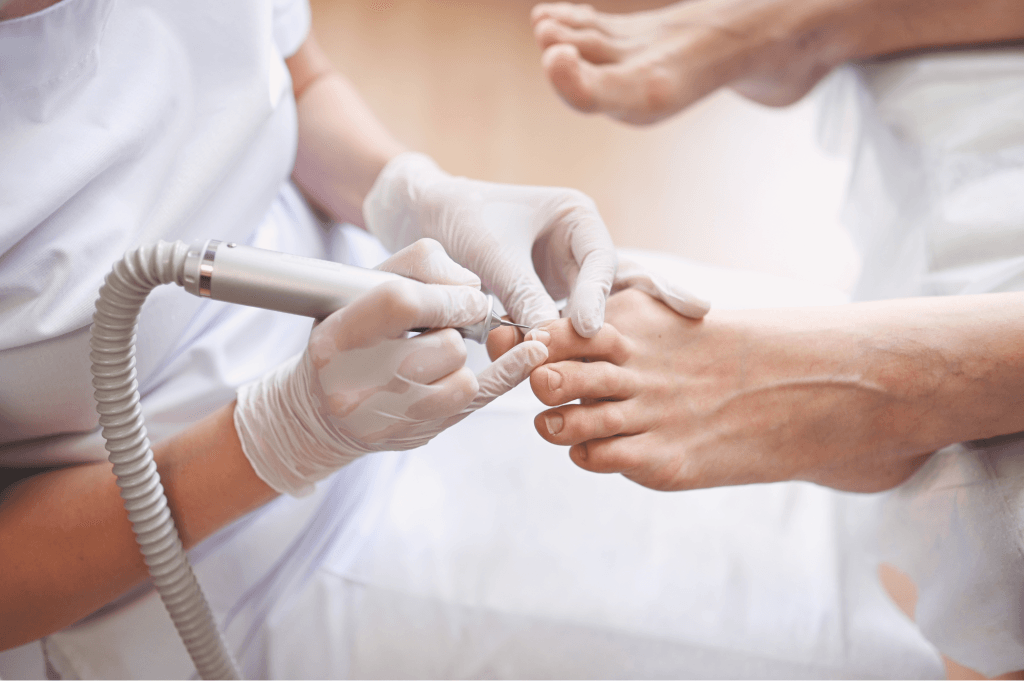
Nail surgery
Say goodbye to painful ingrown toenails
Sometimes, toenails – especially ingrown ones – can cause ongoing pain and discomfort. While we always explore conservative treatment options first, nail surgery may be necessary for long-term relief.
Performed at our Plympton clinic, the procedure is quick and straightforward. Before surgery, we’ll conduct a thorough medical assessment to ensure it’s the right option for you. We also take the time to walk you through the process, addressing any concerns with our gentle and reassuring approach.
The best part? Toenail surgery is over before you know it.
After applying a local anesthetic to numb the area, our experienced podiatrists complete the procedure efficiently – so you can get back on your feet in no time.
We’ll check in on your recovery, usually the next day and again a week later, to ensure everything is healing smoothly.
If you’re tired of dealing with persistent toenail pain, we’re here to help. Book a consultation today!
A simple solution for lasting relief
- No stitches
- Minimal pain
- Walk immediately after
Toenail surgery FAQs
Toenail surgery is usually recommended when conservative treatments haven’t resolved ongoing issues such as painful or repeated ingrown toenails. It’s a safe and effective option for long-term relief, especially if the nail continues to cause discomfort or infection.
After a thorough surgical assessment, the procedure is performed at our Plympton clinic and is straightforward, and done under local anaesthetic. Once the toe is numb, our podiatrist carefully removes the problem part of the nail, or the entire nail if needed, and applies a solution to help prevent regrowth if required.
The area is completely numbed with a local anaesthetic, so you won’t feel pain during the procedure. Most patients are surprised by how quick and comfortable the experience is. Some mild soreness afterwards is normal and can be managed with rest and over-the-counter pain relief.
Initial healing usually takes 1–2 weeks. You’ll have a follow-up appointment the next day and again around one week later to check your progress and ensure everything is healing well. Most people return to normal activity within a few days.
If only part of the nail is removed, it may grow back. In many cases, a solution is applied to the nail bed to prevent regrowth in the affected area and reduce the chance of the problem recurring. Your podiatrist will discuss the best approach for your situation.
No referral is needed for private appointments.
We’ll provide you with clear aftercare instructions to help support healing and minimise the risk of infection. Keeping the area clean, dry and protected is key. Our team is also just a phone call away if you have any questions during recovery.