



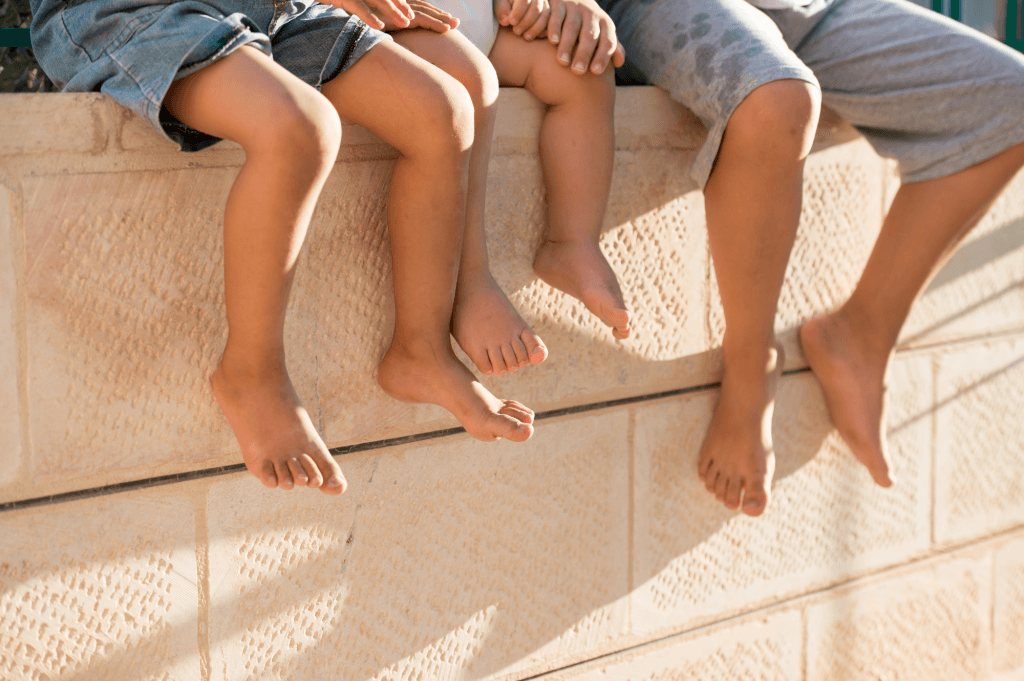
Children’s feet
Caring for little feet of all types
Children’s feet are constantly growing and developing, making early care essential for lifelong foot health. From first steps to sports activities, ensuring proper foot alignment and support can prevent future issues.
Common concerns like flat feet, in-toeing, heel pain, growing pains and toe-walking can impact mobility and comfort.
Many adult foot problems begin in childhood and can often be present at birth. Regular foot care and professional attention can help prevent issues later in life.
Neglecting foot health early on may lead to postural imbalances, poor balance and discomfort in the legs and back, especially if your children are playing organised sports.
Our expert podiatrists assess, diagnose and provide tailored treatments to support your child’s development – whether it’s custom orthotics, footwear advice or simple exercises.
If you have any concerns about your child’s walking or foot health, book a consultation today. Early intervention makes all the difference!
Children we treat
- Babies & toddlers
- Big kids
- Teens & adolescents
Children’s foot health FAQs
If your child experiences pain, walks differently from other kids their age, has frequent tripping or balance issues, or complains of discomfort in their feet, ankles or legs, a podiatry assessment is recommended. Early intervention can help prevent future problems.
Flat feet are common in young children as their arches are still developing. Most children develop arches by the age of 6 or 7. However, if your child has pain, difficulty walking or excessive wear on their shoes, it’s best to have them assessed.
Toe-walking can be normal in toddlers learning to walk. However, if it continues beyond the age of 2, is persistent, or affects their mobility, a podiatrist can assess for underlying causes and recommend appropriate treatment.
In-toeing (pigeon-toeing) and out-toeing can be caused by variations in leg or foot development. While many children outgrow these walking patterns, some cases require monitoring or treatment to prevent long-term issues. A podiatrist can help determine if intervention is needed.
Children’s shoes should be well-fitted, supportive and allow for natural foot movement. Look for shoes with a firm heel counter, flexible soles and enough room for toe movement. Avoid shoes that are too tight, too loose, or have poor arch support.
Orthotics may be recommended for children with foot pain, poor posture or specific gait abnormalities. A podiatrist can assess whether orthotics would benefit your child and provide custom solutions if needed.
Yes! Children involved in sports are prone to foot and ankle injuries, such as sprains, heel pain (Sever’s disease) or stress fractures. A podiatrist can diagnose, treat and provide prevention strategies to keep young athletes active and pain-free.
Encourage barefoot play on safe surfaces to strengthen foot muscles, ensure they wear properly fitted shoes and monitor for any signs of pain or unusual walking patterns. Regular check-ups with a podiatrist can help detect any issues early.